
Choosing to become a teacher may seem straightforward from the outside.
In many disciplines — mathematics, for example — a teacher completes their degree, learns the key concepts and methods, refines their teaching style over time, and eventually settles into a rhythm that works. After a few years, the process becomes predictable and comfortable.
That’s precisely the kind of complacency António Nóvoa warns against: the illusion of experience without renewal.
In the creative fields, however, that comfort zone doesn’t exist.
The rapid pace of technological change — combined with students who are increasingly connected and demanding — requires educators to remain in constant evolution.
A design or photography instructor must be “skin in the game”: someone actively producing, experimenting, and contributing to the field in real time.
Take photography as an example.
Being a great photographer in the film era isn’t enough if one continues teaching the same content decades later.
Today’s students expect to see their professor’s current portfolio — on social media, professional websites, or digital platforms. They admire teachers who are relevant beyond the classroom, whose practice remains alive.
Of course, this expectation can create anxiety.
Keeping pace with technology is challenging.
Yet, those with solid foundational knowledge have an advantage: they can easily outperform trends because they understand the principles behind them.
The key lies in maintaining discipline and curiosity.
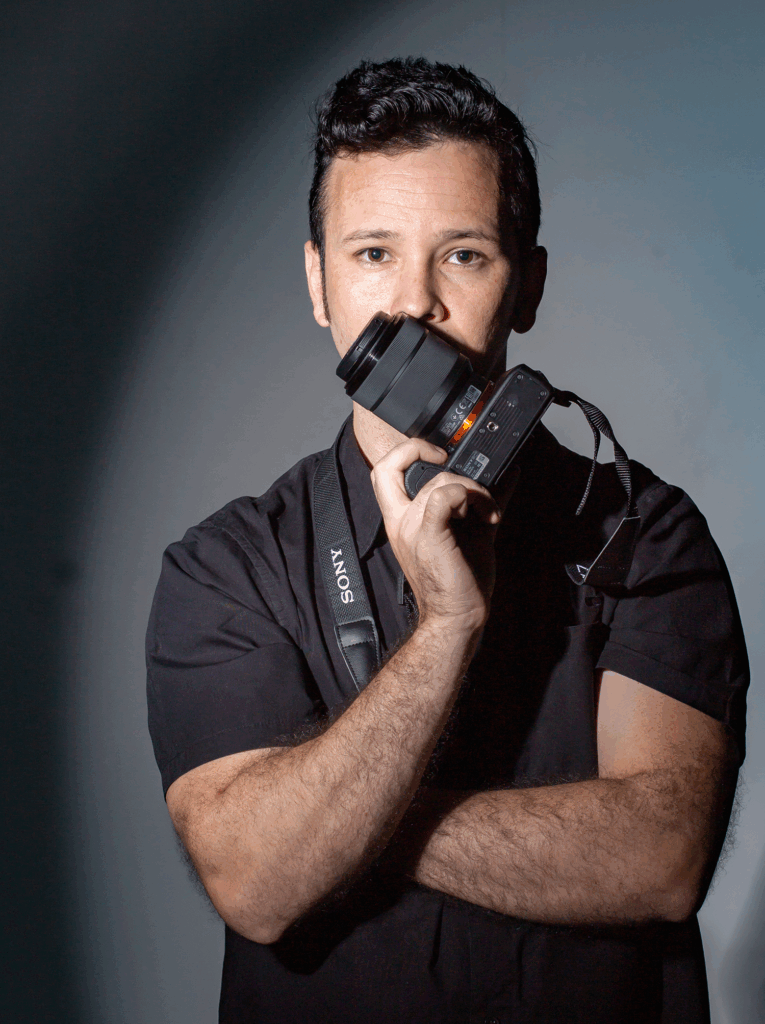
Personally, I make a habit of updating myself every three months on the photography and imaging market.
Back in 2016, I switched from DSLR to mirrorless, adopting a Sony A7II when few photographers in Brazil even recognized the brand’s potential.
Two years later, the A7III became a hit, confirming what I had already discovered — that mirrorless systems represented the future of hybrid photo and video production.
Once I began using one daily, I finally understood the real advantage: I never missed exposure again.
That single upgrade profoundly changed my workflow — and, by extension, my teaching.
Students quickly lose interest when confronted with obsolete lessons presented as if they were still relevant.
There’s value, of course, in revisiting analog photography — to understand the roots of digital imaging or to expand creative awareness.
But trying to convince a young photographer, capturing hundreds of high-quality images on an iPhone, that “real photography” belongs to the past is both unconvincing and self-defeating.
So, to my fellow art educators, a few simple guidelines:
- Don’t dismiss new technologies simply because you’re unfamiliar with them — at least remain open-minded.
- Upgrade your tools regularly. You don’t need to replace your entire setup annually, but enhance something: your computer, storage, camera, lens, lighting, microphone.
- Stay informed — awareness precedes experimentation.
Above all, practice intellectual honesty.
If a student knows something you don’t, acknowledge it, learn from it, and grow together.
Because in the end, the best upgrade is knowledge itself.