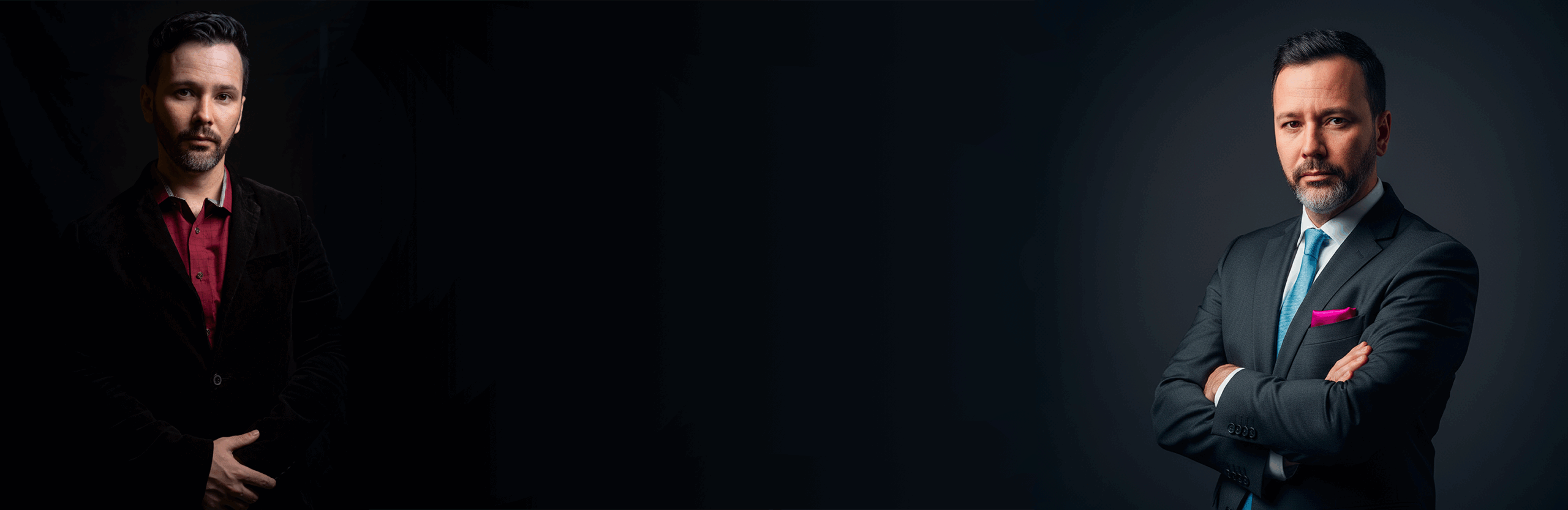

In recent years, we’ve witnessed a remarkable leap in the use of artificial intelligence (AI) for image creation and manipulation.
For me, this transformation began about four years ago, when generative AI systems started to gain public attention.
The first model I experimented with was DALL·E in 2022. Soon after came Midjourney, Leonardo.AI, and several others — each offering a unique way to translate language into imagery.
While these tools produced fascinating results, their unpredictability made them unreliable for professional use.
For a long time, AI served primarily as a supporting tool, helping refine or enhance what had already been captured through traditional methods.
The turning point, in my view, was Adobe Firefly.
Released in March 2023, it represented Adobe’s first major step toward integrating AI natively into Photoshop.
Although its early model was less sophisticated than Midjourney’s and lacked multi-model versatility like Leonardo.AI, Firefly symbolized a fundamental shift — the convergence of human creativity and algorithmic intelligence.
Now, with the introduction of Gemini Nano Banana (2025) and new AI model integrations within Photoshop, the evolution has become extraordinary.
The results are increasingly convincing — in some cases, indistinguishable from traditional portrait photography. I continue to be impressed by their refinement and realism.
More than ever, data quality and prompt design determine the outcome.
We are, in a sense, learning a new artistic language — one that involves communicating with machines not through commands, but through intention.
While traces of artificiality remain, the adaptive nature of these models means that visual coherence is improving rapidly.
It feels as though decades of technological progress have been compressed into less than five years.
So many models, updates, and integrations — the pace itself is astonishing, even exhausting at times.
I don’t know where this trajectory will ultimately lead.
But I’ve learned to embrace a slower, more mindful approach — resisting the temptation to test every new release.
After all, constant experimentation can distract us from what truly matters: the act of creating meaningfully.
In the end, photography — whether produced by lens or by algorithm — remains a matter of seeing, feeling, and translating the world.
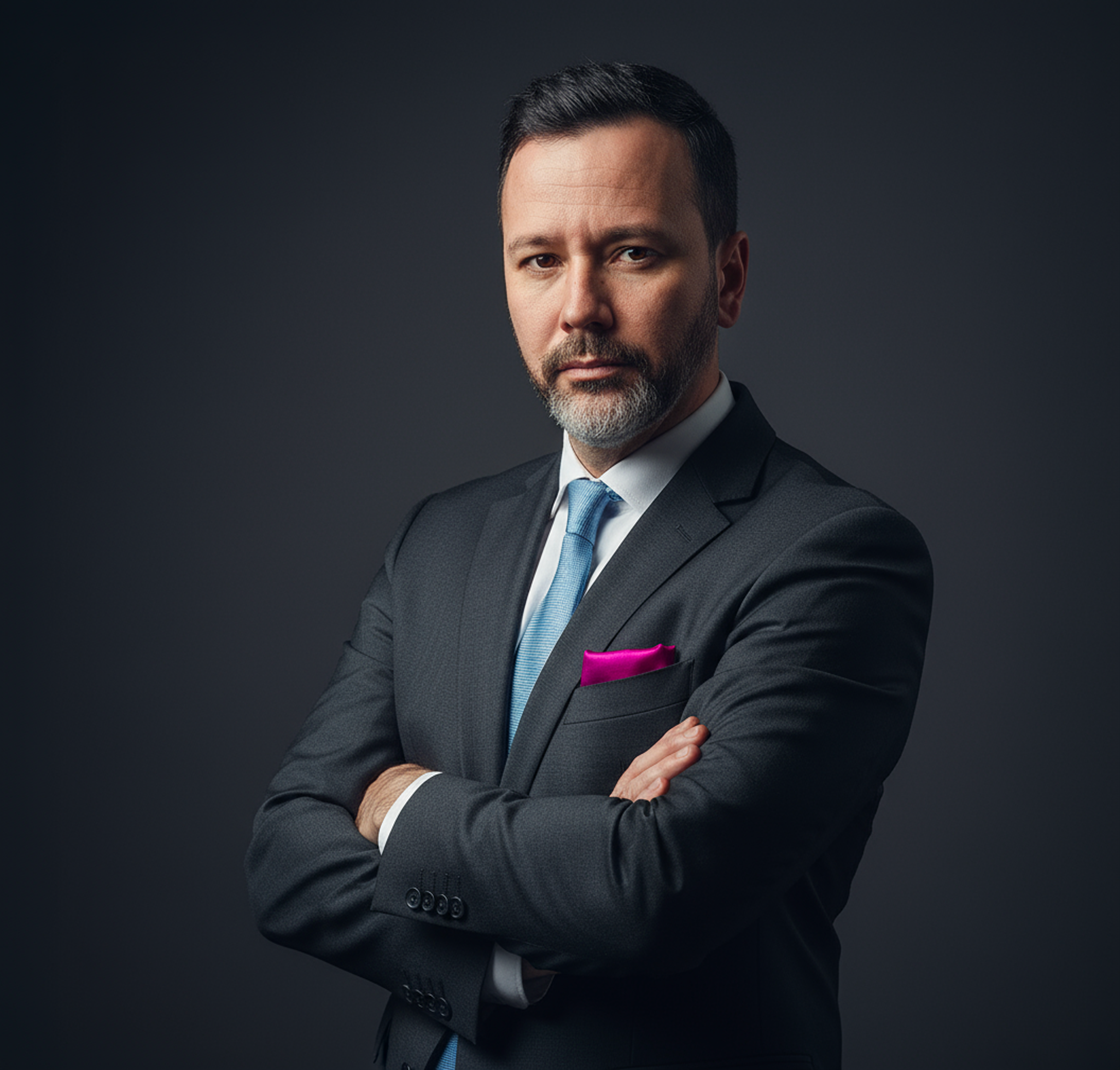
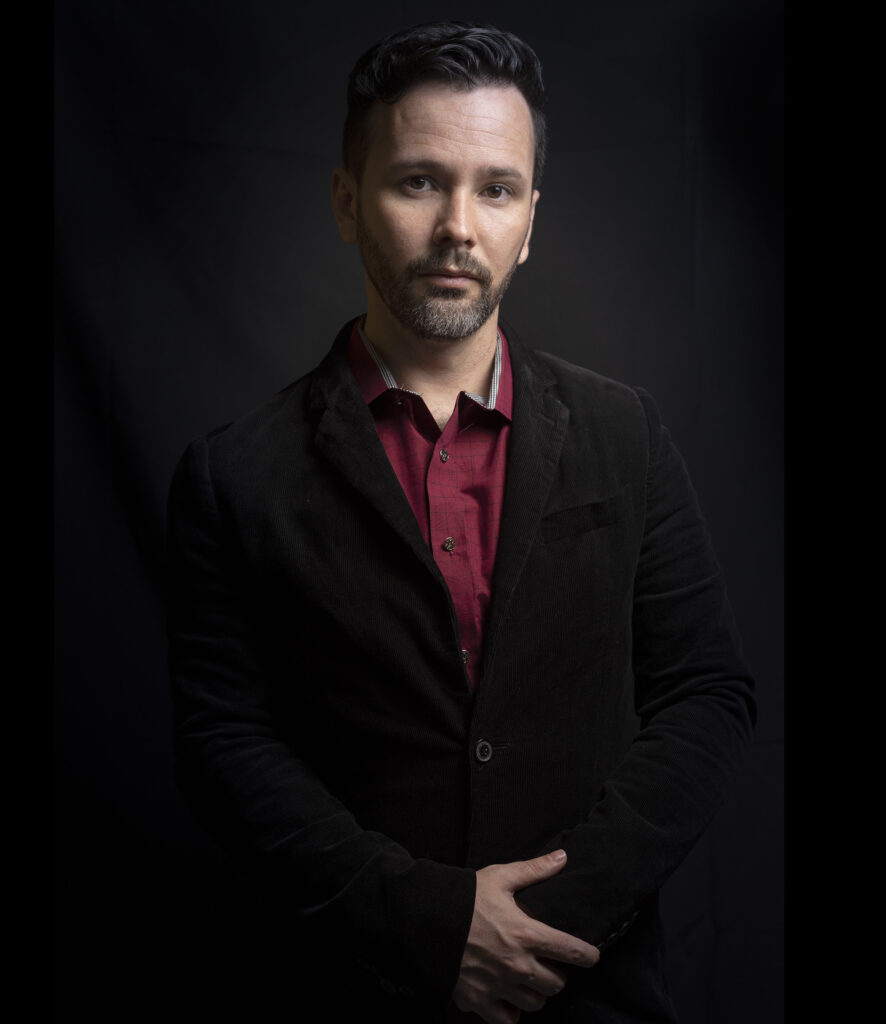
Below, you’ll find two portraits of me.
One was captured traditionally with camera and light; the other was generated entirely by AI.
Can you tell which is which?
I wondered whether artificial intelligence could actually tell which portrait was real.
So, I sent both images to several AI-based detection systems — the same ones designed to distinguish between authentic and synthetic visuals.
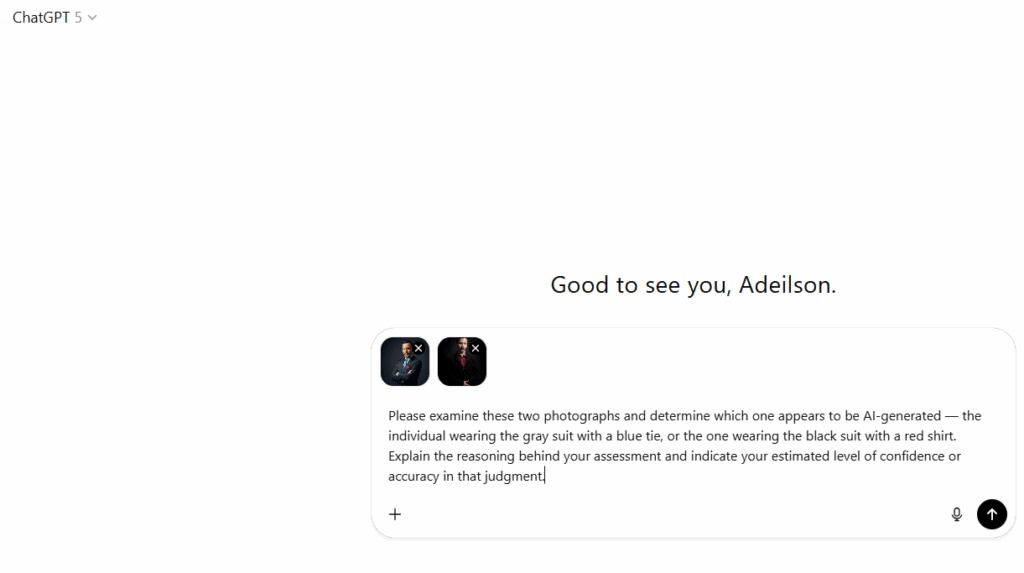
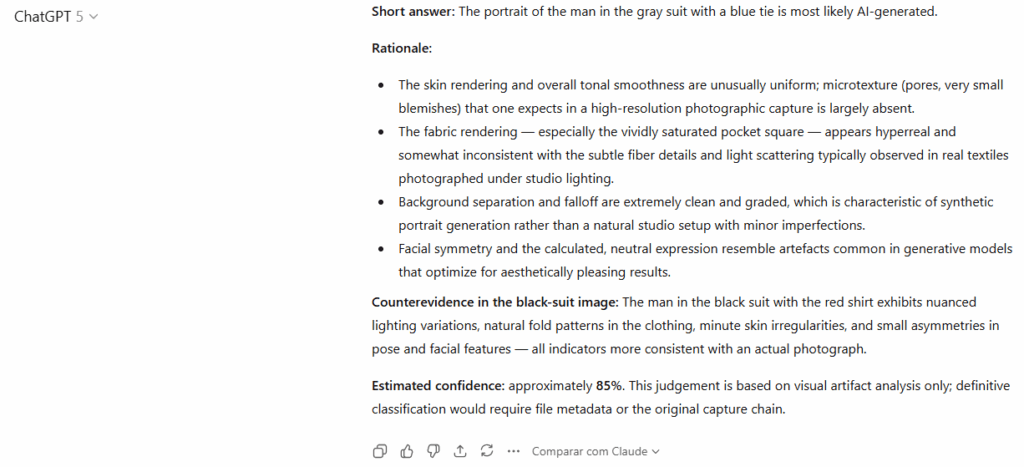
And this was the result — moral of the story: when an image looks overly uniform, too perfect, with flawless contours and an ideal pose, these tend to be signs that it was generated by AI.
So, my goal now is to reach a level of photographic mastery so perfect that the AI itself will believe it created it!
It is, of course, evident that between the photo with the black suit and the one with the gray suit, I’ve aged somewhat. Well, that part has little to do with artificial intelligence—and everything to do with time! Haha.